What Size Tankless Water Heater Do I Need for a San Antonio Home?
The flow rate printed on the box assumes warm groundwater. San Antonio's cold-side supply drops to about 55 degrees, so sizing has to be done at a 70 degree rise. Here's the real math, and why the gas line usually decides it, not the unit.
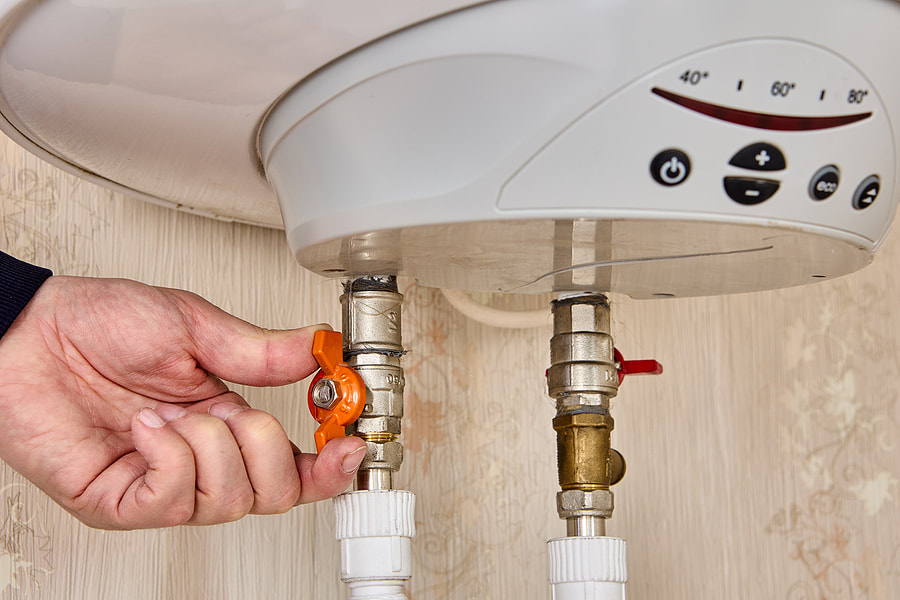
The number on the box is not the number you get in San Antonio
Every tankless unit advertises a headline flow rate, something like "up to 11 gallons per minute." That figure is measured at a small temperature rise, usually a 35 or 45 degree lift, on warm incoming water. San Antonio doesn't have warm incoming water in the dead of a cold snap. Our coldest groundwater runs around 55 degrees, and a comfortable shower is about 105 to 120 degrees, so the unit has to add roughly a 70 degree rise. At that rise, real usable flow drops close to half the box number.
I'll be straight with you about how we size these. After running tankless installs across San Antonio, Alamo Heights, Schertz, and Helotes, we've learned to ignore the marketing gpm and size every gas tankless at ΔT 70°F off ~55°F groundwater. That's the number the manufacturers themselves list deep in the spec sheet, and it's the only one that holds up when it's 32 degrees outside and three people want hot water.
If you're weighing a tankless and want it sized right the first time, we handle tankless and tank water heater service same-day or next-day. Call us at 210-212-7667.
What size tankless water heater do I need?
Size a gas tankless by adding up the peak simultaneous hot-water flow your household actually uses at once, then matching that to the unit's output at a 70 degree rise, not the headline rating. In San Antonio a family that runs one shower plus a sink needs roughly 4 gpm of real output; two showers at once pushes 5 to 6 gpm at ΔT 70°F, which is a large residential unit here.
Here are the typical fixture demands we use to build the number:
- Shower: 1.5 to 2.5 gpm each
- Kitchen or bathroom sink: 1.0 to 1.5 gpm
- Dishwasher: 1.0 to 1.5 gpm
- Clothes washer (hot fill): 1.5 to 2.0 gpm
Add up only the fixtures that realistically run at the same time, not every faucet in the house. Then read the unit's output at a 70 degree rise from its spec chart, not the front-of-box gpm. A "11 gpm" unit often delivers around 5 to 6 gpm at ΔT 70°F, and that is the figure that has to cover your peak. Size to your real morning-rush load and you get steady hot water. Size to the box number and you get the cold-water sandwich on the coldest week of the year.
We size gas tankless for a 70 degree rise off roughly 55 degree San Antonio groundwater. That sizing math only holds if the exchanger stays clean, because scale steals the very capacity we sized the unit to deliver.
Tankless water heater gas line size: the real constraint
Here's the part most sizing guides skip, and it's the one that actually decides the job in San Antonio homes: the gas line, not the unit, is usually the ceiling. A whole-home gas tankless commonly needs 150,000 to 199,000 BTU to hit its output. Most existing homes were plumbed for a 40,000 BTU tank heater on a 1/2 inch gas line, and that line physically cannot carry the fuel a tankless demands. Bolt a big tankless onto an undersized line and it starves, under-fires, and never makes its rated flow no matter how the unit is set.
Before we quote any tankless changeout, we verify the gas supply can feed it. That means checking three things:
- Line diameter and length. A whole-home tankless typically wants a 3/4 inch dedicated run, sometimes larger depending on the distance from the meter. Long runs lose capacity, so the same pipe size that works near the meter can fall short across the house.
- Meter and regulator capacity. The gas meter itself has to supply the added load on top of the range, dryer, and furnace already on it. A 199,000 BTU appliance is a big new demand.
- Manifold and other appliances. We add up total connected load so the tankless isn't robbing the furnace during a cold snap, which is exactly when both run hard.
If the gas line needs upsizing, that's a permitted gas job filed through the City of San Antonio Development Services Department under our RMP #36282, with the line pressure-tested to 10 psi for 15 minutes minimum. We tell you that up front. A tankless quote that ignores the gas line is a quote for a unit that won't perform. No upsell on faith, but no pretending the fuel supply doesn't matter either.
When a tankless is the wrong call for your house
I'll draw the line most installers won't. Don't switch to gas tankless if your only gas service is a small meter feeding a 1/2 inch line clear across the house and you have no appetite for the gas-line and possibly meter work it takes to feed one. In that case a high-efficiency tank, or a right-sized point-of-use approach, gets you hot water without a five-figure fuel-supply project. We'd rather tell you that than sell you a big tankless that under-fires forever. If your last water heater install was recent and the tank is fine, you also don't need to rip it out to chase efficiency yet. Check the age first.
Tankless water heater flow rate for a house: whole-home vs point-of-use
Deciding between one whole-home unit and smaller point-of-use units comes down to how spread out your hot-water demand is. One central whole-home tankless, sized at ΔT 70°F to cover your peak simultaneous flow, is the right answer for most San Antonio houses because the fixtures cluster during the morning rush. Point-of-use units make sense for a far-off bathroom, a casita, or a shop sink where running a big central unit's hot water across the house wastes both water and wait time.
The trade-off works like this:
- Whole-home tankless: one unit, one gas run to size correctly, endless hot water for the whole house as long as you sized for peak flow. Best for the typical Bexar County home where showers and the kitchen run at overlapping times.
- Point-of-use tankless: small units placed at the fixture, no long hot-water wait, but each one still needs adequate electric or gas capacity where it sits. Best as a supplement to a whole-home unit, not usually a whole-house strategy on its own.
Most homes we install in San Antonio get a single correctly sized whole-home gas unit. The point-of-use route earns its keep in specific spots, an addition or a detached space, where the plumbing run to a central unit is genuinely long. We size both against real flow at a 70 degree rise, because a point-of-use unit fed cold winter water has the same rise problem the whole-home unit does, just at a smaller scale.
Why hard water changes the sizing conversation
Sizing a tankless right in San Antonio is only half the job, because SAWS runs 15 to 20 grains per gallon, some of the hardest water in the country, and that hardness scales a heat exchanger fast. Scale insulates the exchanger and narrows its passages, which quietly steals the exact output you sized the unit to deliver. A unit sized perfectly at ΔT 70°F will fall short a year in if the exchanger is caked with scale.
That's why we bring up a softener on nearly every tankless quote, and it's covered in detail in our post on how hard water forces the descaling schedule. A softener upstream protects the capacity you paid to size for and keeps Rinnai and Navien warranties valid in a hard-water market like ours. Size the unit, feed it the right gas, then protect it with softened water, and a tankless runs its full 15 to 20 year life here instead of falling off inside a few seasons.
FAQ
Does hard water damage a tankless water heater?
Yes. San Antonio's SAWS water at 15 to 20 grains per gallon plates calcium carbonate scale onto the inside of a tankless heat exchanger, which narrows the flow passages, insulates the exchanger, cuts hot-water output, and can trip scale error codes and short-cycling within a year on unsoftened water. Left unaddressed, scale is the single biggest thing that shortens a tankless heater's life in this market and can push a scale-related failure outside warranty. A softener upstream plus periodic descaling is the fix. We cover the full schedule in our tankless descaling guide.
How many gpm does a family of four need in San Antonio?
Plan for roughly 5 to 6 gpm of real output at a 70 degree rise if two hot fixtures can run at once, which is common during a morning rush. That translates to a large residential gas unit here, because the same appliance only delivers around half its headline box rating once it has to lift 55 degree groundwater to shower temperature. We size to your actual peak simultaneous flow, not the front-of-box number.
Can I put a tankless on my existing gas line?
Often not without changes. Most San Antonio homes were plumbed with a 1/2 inch gas line for a 40,000 BTU tank heater, and a whole-home tankless needs 150,000 to 199,000 BTU, which usually requires a 3/4 inch dedicated run and sometimes meter capacity work. We check line diameter, length, and total connected load before quoting, and any gas-line work is permitted through the City of San Antonio Development Services Department under RMP #36282.
Get your tankless sized right
If you're researching a tankless for a San Antonio home, the two numbers that matter are the 70 degree rise off 55 degree groundwater and the gas-line BTU capacity feeding the unit. Get those right and a tankless delivers endless hot water for 15 to 20 years. Get them wrong and you've bought an expensive appliance that never makes its rated flow. We size the unit to your real peak demand, verify the gas supply can feed it, and tell you plainly if a tank makes more sense for your setup. No upsell on faith.
We also handle tankless installation in Alamo Heights and the surrounding inside-Loop-410 homes, where older gas plumbing often needs a line upsize before a tankless will perform.
Armor Pro Services is licensed in Texas under RMP License #36282, locally owned and operated, and available same-day or next-day across San Antonio, Alamo Heights, Schertz, Converse, and Helotes. Free estimates and competitive, upfront pricing, with workmanship backed by a one-year written warranty and parts under manufacturer terms. Call us at 210-212-7667 or book tankless and tank water heater service online.
Click to Call · 210-212-7667