Tankless Water Heater Descaling in San Antonio: When, Why, and How Often
SAWS runs 15 to 20 grains per gallon, some of the hardest water in the country. Here's why that scales a tankless heat exchanger fast, when descaling matters, and the fix most flush guides skip.
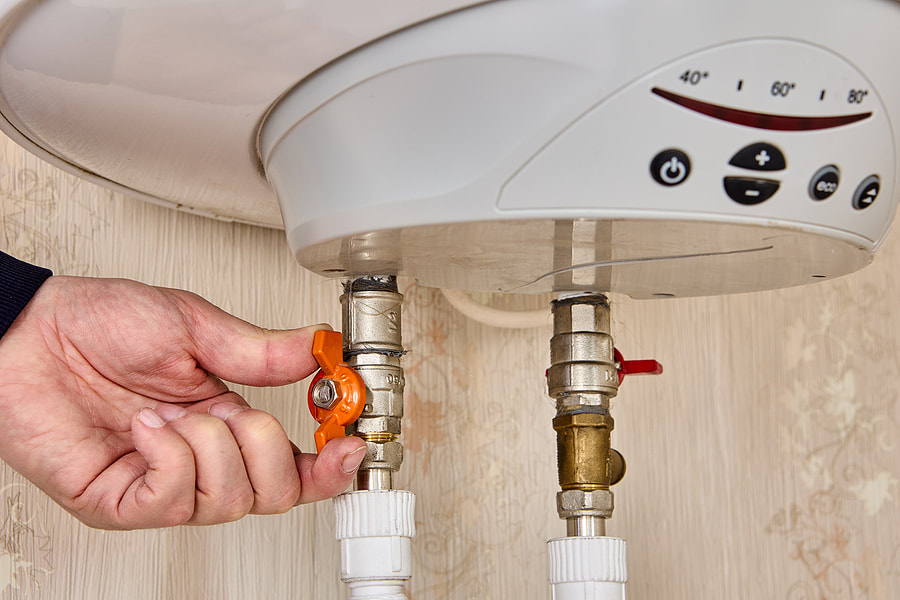
The annual-flush advice is wrong for San Antonio water
Almost every tankless descaling guide online says the same thing: flush the unit once a year with vinegar and you're set. That advice was written for a national average, and San Antonio is nowhere near the average. SAWS tests 15 to 20 grains per gallon (gpg) across most of Bexar County, which the hardness scale classifies as "very hard." At that concentration a tankless heat exchanger scales far faster than the once-a-year rule assumes.
I'll be straight with you about what we see in the field. After running tankless service across San Antonio, Schertz, and Helotes, we've stopped treating annual descaling as the finish line here. On unsoftened SAWS water it's a stopgap that buys time, not a fix. The real fix is a softener upstream, and we'll get to why below. First, the triage.
If your tankless is short-cycling, throwing scale error codes, or the hot water has gone lukewarm, that's the scale talking. We handle tankless water heater service in San Antonio same-day or next-day. Call us at 210-212-7667.
How often should you descale a tankless water heater?
In San Antonio, plan on descaling every 6 to 12 months if you have no softener, and every 12 to 24 months if you do. The manufacturer default of "once a year" assumes moderate hardness. On unsoftened SAWS water at 15 to 20 gpg, a heat exchanger can build enough scale to affect flow and efficiency well before the twelve-month mark, especially in a high-demand household.
Here's the split we actually recommend, based on the water feeding the unit:
- No softener, standard SAWS water (15 to 20 gpg): descale every 6 to 12 months. The higher your hardness zone, the shorter the interval.
- Softened water upstream: every 12 to 24 months is plenty. Softening is what buys back the long descaling interval the manuals assume.
- Schertz and far-north-side homes (closer to 20 gpg): treat 6 months as the working baseline without a softener. These zones push the top of the SAWS range, which is why we see the fastest scaling out that way.
The point of a descaling flush is to circulate a descaling solution through the heat exchanger to dissolve the calcium carbonate that's plated onto the inside of those narrow passages. On very hard water that buildup is measurable and quick, which is the whole reason the interval tightens.
Signs your tankless water heater needs descaling
The clearest sign is hot water that's gone lukewarm or fluctuates mid-shower, because scale insulates the heat exchanger from the water it's trying to heat and narrows the passages the water flows through. If you're getting cold sandwiches in the shower on a unit that used to run steady, scale is the first thing we check.
Watch for this cluster of symptoms. Any two together usually mean the exchanger is scaled:
- Fluctuating or lukewarm hot water, especially the "cold water sandwich" where the temperature dips partway through a shower
- Reduced hot water flow rate at the same fixtures that used to run strong
- Scale or descale error codes on the display (Rinnai and Navien both flag this; the exact code is in the manual)
- A rattling, popping, or kettling sound when the burner fires, which is water flashing to steam behind a scale layer
- The unit cycling on and off rapidly (short-cycling) instead of holding a steady flame
San Antonio fact: Even 15 gpg water can scale a tankless heat exchanger fast enough to trip error codes inside a year when there's no softener upstream. That is why the units we service in this market need a tighter descaling schedule than the manual prints on the box.
If you're seeing these signs, the exchanger needs a flush, and we'll also check whether the inlet screen filter is packed with scale flakes while we're in there. That's a tankless service call or 210-212-7667.
Hard water and tankless water heater lifespan
Left unaddressed, scale is what shortens a tankless heater's life and voids its warranty. A tankless unit is a good bet in San Antonio because it dodges the sediment corrosion that kills tank heaters early here, but it trades that for a heat exchanger that's extremely sensitive to scale. Ignore the descaling and you can lose an expensive unit years ahead of its rated 15-to-20-year life.
The warranty angle is the part homeowners get burned on. Rinnai and Navien, two of the brands we service, typically require softened water to keep tankless warranty coverage intact in a hard-water market like ours. Skip the softener, skip the descaling, and a scale-related failure can land outside coverage.
> "We size gas tankless for a 70 degree rise off roughly 55 degree San Antonio groundwater. That sizing math only holds if the exchanger stays clean, because scale steals the very capacity we sized the unit to deliver."
This ties straight back to San Antonio's water. The same 15 to 20 gpg hardness that we cover in detail on our SAWS 15 to 20 gpg water hardness breakdown is what plates out on the exchanger. A softener installed upstream is the single best thing you can do to protect a tankless unit and keep its warranty valid, and it's the reason we bring up softening on nearly every tankless quote.
When descaling is the wrong call on its own
Here's the line most flush guides won't draw. Don't keep descaling a tankless unit every six months and call it handled if you're on unsoftened SAWS water. That's treating the symptom on a loop. If you're flushing that often, the honest recommendation is to soften the water feeding the unit, which drops the descaling interval back to a normal 12 to 24 months and protects the warranty at the same time. Descaling forever without a softener is money spent managing a problem you could mostly remove. We'll tell you that plainly instead of selling you a flush subscription.
Can you descale a tankless water heater yourself?
You can, on a unit that has the right service valves installed, and plenty of San Antonio homeowners do their own flushes. The basic job is: shut off the gas and the hot and cold isolation valves, hook a submersible pump and two hoses to the service valve ports, and circulate a descaling solution through the heat exchanger for the time the manufacturer specifies, then flush it clean with water.
Where DIY runs into trouble in our market:
- No service valve kit installed. Many builder-grade tankless installs skipped the isolation valve kit. Without it there's no clean way to circulate solution, and adding the valves is a plumbing job in itself.
- A unit already throwing error codes. If it's scaled badly enough to fault, a home flush may not fully clear it, and forcing more runtime on a scaled exchanger can push a repair into a replacement.
- The gas and combustion side. Anything past the flush (a burner that won't light clean after descaling, a gas or venting issue) is licensed work, not a DIY step.
If you've got the valves and a clean unit, a careful homeowner flush is reasonable maintenance. If you're missing the valves, seeing error codes, or you'd just rather it be done right, that's our call. We flush the exchanger, clean the inlet screen, and check the gas and combustion side while we're there.
What does tankless descaling cost in San Antonio?
We don't quote exact prices in an article, because the number depends on whether service valves are already installed, the unit's condition, and whether it needs more than a flush. What we will tell you honestly: a straightforward descaling flush on a unit with service valves is a modest maintenance call, while a heavily scaled unit that's faulting, or one that needs isolation valves added first, costs more because it's more work. We give a free estimate and competitive, upfront pricing before we touch anything, so you'll know the number first. Call 210-212-7667 and we'll size the job over the phone.
FAQ
Can I descale a tankless water heater with vinegar?
Yes, white vinegar is the common DIY descaling solution and it works on light-to-moderate scale, though a dedicated descaling solution acts faster on the heavy buildup we see on unsoftened SAWS water. Either way, the unit needs isolation service valves and a pump to circulate the solution through the heat exchanger. If your unit doesn't have those valves, or it's already throwing scale error codes, that's the point to call us instead of forcing it.
Does a water softener mean I never have to descale?
No, but it changes the math a lot. A softener upstream drops the descaling interval from every 6 to 12 months on raw SAWS water to every 12 to 24 months, and it keeps your Rinnai or Navien warranty valid. Think of the softener as protecting the exchanger and the descaling as light periodic maintenance, rather than the constant firefighting descaling becomes without one.
Is a tankless water heater worth it in San Antonio's hard water?
Yes, with one condition: soften the water feeding it. Tankless units dodge the early sediment corrosion that kills tank heaters in 6 to 8 years here, and they run 15 to 20 years when the exchanger stays clean. The catch is that 15 to 20 gpg water scales the exchanger fast, so a softener upstream is what makes tankless the smart long-term choice in this market rather than a maintenance headache.
Get your tankless serviced
If your tankless is short-cycling, throwing scale codes, or losing hot water, San Antonio's 15 to 20 gpg SAWS water is the likely cause, and a descaling flush is the near-term fix. But if you're flushing every six months, the real answer is a softener upstream. We flush the exchanger, clean the inlet screen, check the gas and combustion side, and give you the straight recommendation on softening. No upsell on faith. We also handle tankless service in Schertz, where the water runs closer to 20 gpg.
Armor Pro Services is licensed in Texas under RMP License #36282, locally owned and operated, and available same-day or next-day across San Antonio, Alamo Heights, Schertz, Converse, and Helotes. Free estimates and competitive, upfront pricing, with workmanship backed by a one-year written warranty and parts under manufacturer terms. Call us at 210-212-7667 or book tankless water heater service in San Antonio online.
Click to Call · 210-212-7667