Expansion Tank Repair in San Antonio, TX
Your relief valve is dripping, your pipes bang when a faucet shuts, or an inspector wrote up a tired expansion tank, and you want it fixed, not a lecture. Here is how we handle it in San Antonio: we tap-test the tank, read the static and post-heating pressure, and check whether the tank, the PRV, or the relief valve is the actual fault before we quote a part. Most of these are a same-day fix. Almost every home behind a SAWS check valve or a PRV is a closed system, so thermal expansion has nowhere to go, and a dead tank pushes that pressure straight into your water heater. Armor Pro Services is licensed under Texas RMP #36282, locally owned, and you get a written price before we touch anything.
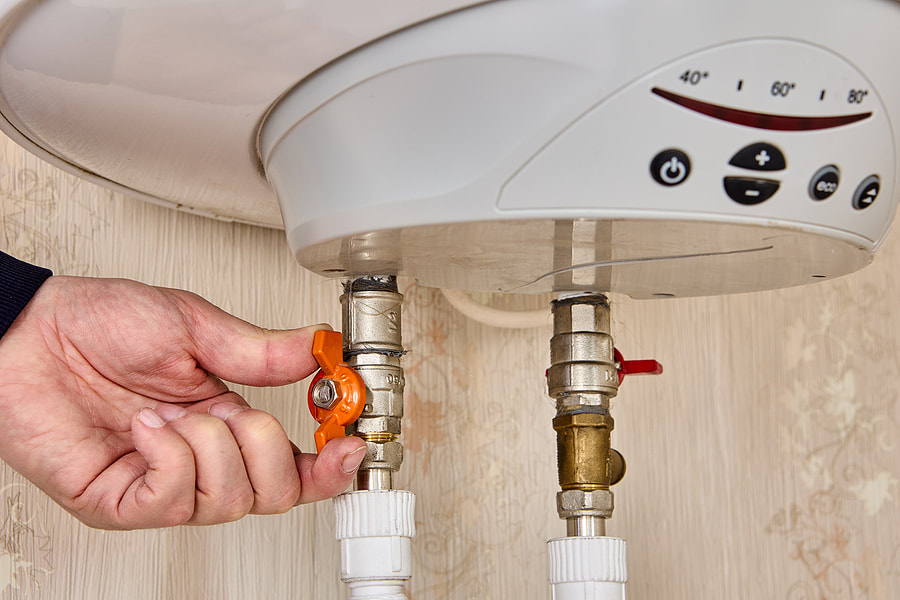
Expansion Tanks Repair in San Antonio: What We Actually Fix
A no-drama expansion tank call runs about 45 minutes to an hour once we know the tank is genuinely the fault. The honest first step is not swapping the tank, it is proving it is dead. We tap-test the body, gauge static pressure at the tank tee or a hose bibb, then watch what the pressure does through a full heating cycle. Here is what a repair on a closed San Antonio system usually looks like:
- Recharging or replacing a waterlogged tank whose bladder has torn or bled off its air charge, pre-charged to match your house pressure (usually 50 to 65 psi) before it ever sees water.
- Correcting a tank that was installed at the factory 40 psi charge and never matched to the home, which is why it failed early.
- Replacing the tank tee, the shutoff, or a weeping T&P relief valve that got blamed on the tank.
- Re-supporting a tank that is hanging its full weight off the copper or PEX, which stresses the fitting until it seeps.
Field note: On SAWS water at 15 to 20 grains per gallon, we see expansion tanks waterlog in as little as 12 to 24 months on unsoftened homes, well short of the life printed on the box.
We will not push a new tank when a recharge, a re-support, or a PRV adjustment gets you fixed the same day. Read us the symptom over the phone and we load the truck for the most likely fault.
Signs Your Expansion Tank Has Failed
A failed tank shows itself in a handful of consistent ways, and once you know them the call is quick. Inside the tank a rubber bladder separates an air charge from the water side, and when that bladder tears or the air bleeds off, the tank waterlogs and stops absorbing anything. Watch for these:
- The temperature-and-pressure relief valve on the heater drips or spits, worst right after a hot shower when the burner just cycled.
- The tank feels heavy and sounds dull and solid across its whole body when you tap it, instead of ringing hollow up top.
- Pipes bang or knock when a fixture shuts.
- Static pressure reads normal cold but climbs well past 80 psi after the heater runs.
"The tap test is the fastest field check we have: a good tank rings hollow up high where the air sits and dull down low. A dead tank is dull top to bottom because it is full of water."
Any one of those points at the tank, but the drip alone does not prove it, which is exactly why we test before we quote. Not sure what you are hearing? Call 210-212-7667 and describe it.
Waterlogged Expansion Tank Symptoms: The Tap Test Explained
Waterlogged is the word for a tank that has lost its air charge and filled with water, so it absorbs nothing and the closed system has no relief. The symptoms overlap with a bad PRV and a tired relief valve, which is why so many of these get misdiagnosed. Here is how we tell them apart on a Bexar County call.
First we tap the tank top to bottom. A healthy tank gives a clear hollow ring in the upper third where the air charge lives and a dull thud in the lower half where the small water reservoir sits. A waterlogged tank is dull all the way up.
Do this before you call: tap the top of the tank with a knuckle. Hollow up high means the bladder may still be alive and the drip is likely a PRV or relief-valve issue. Dull all the way up means the tank is waterlogged and done.
Then we gauge pressure through a heating cycle. If static holds steady and the drip stops, the tank was the culprit. If pressure climbs past 80 psi even with a fresh tank, the PRV is drifting and that is the real fix. That two-part check is the difference between a repair that holds and one that fails again by next summer.
Why Closed-System Homes Need an Expansion Tank: The SAWS Check Valve
For most San Antonio homes this is not optional, and the reason is the meter. SAWS installs a backflow-prevention check valve at the connection, or you have a pressure-reducing valve after it, and either one turns your plumbing into a closed system. Water heated in the tank can no longer push back toward the street the way it could on an old open system.
Water expands when it heats. In a closed system that expansion has nowhere to go, so Texas plumbing code requires a thermal expansion tank to absorb it. When the tank fails, the pressure spike from every heating cycle bleeds into the nearest weak point, and that weak point is almost always your water heater. That is how a failed part the size of a basketball quietly shortens a water heater to half its life.
"A PRV without a working expansion tank is a closed system with no relief. That is not a code footnote, it is the setup an inspector flags on a water heater final or a resale inspection."
If you are not sure whether your home is on a closed system, one pressure test at the tank tee answers it. For the broader picture, our San Antonio plumbing repairs page covers what an aging home needs across Bexar County, and the PRV and closed-system pressure page covers the valve side in full.
The 8-to-12-Year Window South of Loop 1604
This is the pattern we keep seeing, and it is specific to San Antonio's newer housing stock. Most homes built after 1970 south of Loop 1604 sit on post-tension slab foundations, and they went up with a PRV and an expansion tank as standard equipment. Those two parts have a service life, and out here they hit it together somewhere in the 8-to-12-year range.
We started tracking it because the calls cluster. A subdivision fills in, and eight to twelve years later we are on the same streets replacing tanks and adjusting PRVs, because everything was installed the same year with the same parts. The tank waterlogs first, the relief valve starts weeping, and if the PRV has drifted high the homeowner who only replaces the tank is back on the phone the next season.
Local pattern: in post-1970 south-metro builds we treat the expansion tank and the PRV as a matched pair at this age, because replacing one without checking the other is the shortcut that fails.
If your home is in that window and the relief valve has started dripping, that is the tell. Where the scope ties into a water heater changeout or a gas correction, we file the permit through the City of San Antonio Development Services Department under RMP #36282. Ready when you are: call 210-212-7667.
Why San Antonio Water Wears Expansion Tanks Out Early
Expansion tanks are rated for years of service, but on SAWS water they rarely reach it, and the reason is the hardness. The system runs 15 to 20 grains per gallon across the metro, hard enough that mineral works into the tank tee and combines with the constant pressure cycling of a closed system to wear the bladder from both sides.
That is why we always ask whether the house is softened before we blame the tank. On homes we have already put a water softener ahead of the heater, the expansion tanks last the way the box promises. On unsoftened homes we see them waterlog in a year or two, which means the honest long-term fix is sometimes upstream of the tank entirely, not a better tank brand.
"If you keep replacing expansion tanks every year or two, the water is the reason, not the tank. Softening the hot-water side is what finally stops the cycle."
We would rather tell you that once than sell you the same tank every spring.
When Expansion Tank Repair Is the Wrong Call in San Antonio
We would rather lose the job than sell you a part that fixes nothing, so here is when we tell San Antonio homeowners to hold off. If your tank is only a year or two old, still rings hollow on top when you tap it, and the drip only shows up now and then, the tank is not the problem. The likelier culprit is a PRV set too high or a relief valve at the end of its own life, and swapping the tank changes nothing.
Skip the tank swap if: the relief valve is weeping and the water is scalding hot. That usually means a thermostat stuck high, which is a water heater repair, not a tank job.
And if you called because an inspector's note just says verify expansion tank, and yours is present, correctly sized, and holding its pre-charge, you do not need us to replace anything. You need the reading confirmed, and we can do that quickly. Check the static pressure and the tank's air charge before assuming the tank is dead, and if you want a second set of eyes, that is what the diagnosis is for.
How an Expansion Tank Repair Call Works in San Antonio
Here is the order of operations so you are not guessing.
- You call 210-212-7667 and describe it: a dripping relief valve, a heavy or waterlogged tank, banging pipes, or an inspector's note. If the valve is actively spraying or the heater area is wet, treat it as urgent and we prioritize it.
- The tech arrives stocked for the common job, correctly sized tanks and the fittings to set them, so most calls are one trip.
- We tap-test the existing tank, gauge static and post-heating pressure, and confirm whether the tank, the PRV, or the relief valve is the actual fault.
- You get a written, upfront price before any work starts. You approve it or you do not.
- We make the repair, pre-charge the tank to match your house pressure, bring the system back up, and confirm the relief valve stays dry through a full heating cycle before we leave.
Workmanship is backed for one year in writing, and the tank itself follows the manufacturer's terms. If the fault turns out to be a heater or a PRV instead, we tell you straight and quote that scope the same way. Prefer to put it in writing? Tell us what is going on and we will come back with a firm number.
Frequently asked
Expansion tank vs PRV: which one is failing?
Tap-test and gauge, do not guess. A waterlogged expansion tank is dull top to bottom when you tap it and the relief valve drips right after the heater cycles. A drifting PRV shows up as static pressure that climbs well past 80 psi even after a fresh tank goes in, and it can also cause banging pipes and a weeping relief valve on its own. That overlap is why swapping only the tank on a bad PRV brings us back in a year. On the newer south-of-Loop-1604 homes at 8 to 12 years old we check both, because the PRV and the tank were installed together and age out together. Call 210-212-7667 and we read both before we quote either.
How long does a water heater expansion tank last in San Antonio?
Less than the box promises. On SAWS water at 15 to 20 grains per gallon, we see expansion tanks waterlog in as little as 12 to 24 months on homes with no softener ahead of the heater. Hard water plus the constant pressure cycling of a closed system wears the internal bladder from both sides. On homes with a water softener protecting the hot-water side, the tanks reach their rated life. If you keep replacing one every year or two, the water is the reason, not the tank brand, and softening the hot-water side is the fix that finally holds.
My T&P valve keeps dripping after a water heater install. Is the expansion tank the problem?
Usually, yes, on a San Antonio home. When a heater goes in on a closed SAWS system without a working expansion tank, or with one that is undersized or still at its factory charge, thermal expansion has nowhere to go and pushes straight out the T&P valve every heating cycle. The valve is doing its job. We confirm it by gauging pressure through a cycle and tap-testing the tank. If a fresh, correctly pre-charged tank stops the drip, that was it. If pressure still climbs past 80 psi, the PRV is drifting and needs attention too. Either way we find the real cause before swapping parts. Call 210-212-7667.
Do I need a City of San Antonio permit to repair my expansion tank?
A standalone expansion tank swap on an accessible cold line generally does not require a permit. When the work ties into a water heater changeout or a gas correction, it does, and we file it through the City of San Antonio Development Services Department under Texas RMP #36282, then schedule and attend the inspection. You are not chasing paperwork. Handling the permit and the inspection is part of the job when the scope calls for it.
Can you repair my expansion tank the same day in San Antonio?
Often, yes. A dripping relief valve and a waterlogged tank are the kind of common calls our trucks are stocked for, so most are one trip. We give you a specific ETA when you call, not a vague window. If the relief valve is actively spraying or the heater area is wet, tell us and we prioritize it. Calls placed by early afternoon on weekdays give you the best shot at a same-day slot. Call 210-212-7667.
Should I repair or replace my expansion tank?
It depends on why it failed and how old it is. A tank that simply lost its air charge and is otherwise sound can sometimes be recharged and re-supported, but once the bladder has torn the tank is done and a new, correctly pre-charged and sized tank is the fix. The bigger question on the newer south-metro homes is the PRV: if it has drifted high, a new tank alone will not hold, so we address the pair. We tell you straight which path you are on after the tap test and the pressure reading, not before. Call 210-212-7667 for an honest diagnosis.