Slab Leak Repair in San Antonio, TX
A warm patch has shown up on the tile, your SAWS bill jumped with no change in how you use water, or you can hear water running with every fixture off. That is the classic slab leak, a pressurized supply line failing under the concrete, and here is how we handle it in San Antonio: we isolate the system to prove it is a supply leak and not a drain issue, pinpoint the exact spot with electronic listening and pressure isolation before we cut anything, then repair the plumbing the right way for your specific slab. Armor Pro Services is licensed under Texas RMP #36282, locally owned, and you get a written price before any concrete is opened. We repair the plumbing. We do not do foundation or structural work, and we will say so plainly rather than take on a trade we are not licensed for.
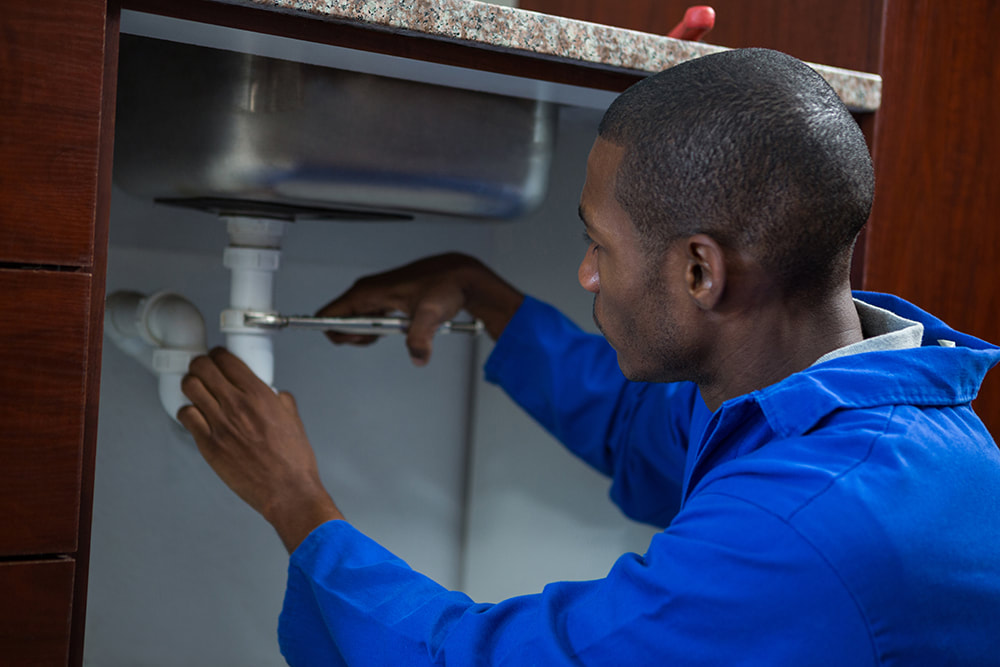
Slab Leak Repair in San Antonio: What We Actually Do
A slab leak is a leak in a water line that runs under or through the concrete your house sits on, and the honest first job is not cutting concrete, it is proving where the water is coming from. We isolate the plumbing and confirm whether it is a pressurized supply leak or an under-slab drain problem, because the two look similar from the living room and are repaired nothing alike. Once it is a confirmed supply leak, you have three real repair paths and we price each one upfront:
- Spot repair. We open the slab at the pinpointed leak, cut out the bad section, replace it, pressure-test, and patch the concrete. The least disruptive fix when the copper is otherwise sound and this is a first, isolated failure.
- Overhead reroute in PEX-A. We abandon the failed under-slab run in place and route a fresh line up a wall, across the attic, and back down. That run never gets cut into concrete again, which is the right call under a tiled bath or a kitchen island.
- Partial or full repipe. The honest answer when soft copper is pinholing in several places at once, because chasing one leak a year on a system failing all over just brings us back.
We are the plumbing contractor. The post-tension cables, the foundation, and any slab engineering belong to a foundation specialist, and we will tell you that straight. Call 210-212-7667 and describe what is happening.
Signs of a Slab Leak in a San Antonio Home
Slab leaks almost never show up as a puddle. They show up as small clues that are easy to write off until the water bill or the floor forces the issue, and on a post-1970 San Antonio home the pressurized supply line under the slab is one of the likeliest places for water to hide. Watch for these:
- A warm or hot spot on the floor, usually tile, which points at the hot-water side.
- Water running when every faucet, toilet, and appliance is off.
- A SAWS bill that jumped with no change in how much water you use.
- Water pressure that dropped across the whole house.
- New cracks in tile, or a section of floor that feels damp or has started to lift.
- A musty smell or mold at a baseboard with no source above the floor.
The fastest check you can do before we arrive: shut off every fixture, find your water meter, and watch the small leak-indicator dial. If it keeps creeping with everything off, water is escaping somewhere in the pressurized system. Talk to a licensed tech before anyone cuts a slab: call 210-212-7667.
Slab Leak Detection on a Post-Tension Slab: How We Find It
Cutting concrete in the wrong place is the single most expensive mistake in this trade, so we do not guess. A pinpoint on a post-tension slab runs the same order every time. First we isolate the system and confirm it is a pressurized supply leak, not a drain. Then we pinpoint the exact spot with electronic listening discs that pick up the hiss of water escaping under pressure through the concrete, and pressure isolation to narrow which line is failing. On a post-tension slab this precision matters even more than usual, because there are tensioning cables cast into the concrete that must not be nicked, so a location good to within a few inches is what keeps the opening small and the cables clear.
"We locate the leak before we quote the repair, and we show you where it is on the floor first."
Most homes south of Loop 1604 were built after 1970 on exactly this post-tension slab construction, which is why slab leaks are a recurring category here and not a freak event.
A smaller, confirmed opening means a cleaner repair and far less floor to patch back. That is the whole point of pinpointing before we cut. Ready when you are: call 210-212-7667.
The Pre-1970 Trap: Cast Iron and Orangeburg Under the Slab
This is the section other slab-leak pages leave out, and it is where a lot of San Antonio homeowners get a wrong repair. In the pre-1970 core, Monte Vista, Olmos Park, and much of the West and South Side, what gets called a slab leak is often not a pressurized supply line at all. It is a cracked cast-iron or Orangeburg drain lateral running under the slab, cracked at a joint or crushed by decades of pecan-root pressure and expansive-clay movement. The tell is different from a supply leak.
- A supply leak runs constantly and spins the meter with everything off.
- A drain-side under-slab failure shows up only when you use water: a slow floor drain, sewer smell, or damp flooring near a bathroom that dries out between uses, with the meter sitting still.
Those two get fixed nothing alike. A drain lateral is a camera-and-sonde job, not a listening-disc job, and we camera the line and mark the defect with a 512Hz sonde rather than cutting concrete on a hunch. This ties into our under-slab drain and sewer diagnostics work, and it is why we ask what the meter is doing before we bring in the acoustic gear. Get the diagnosis right and you cut concrete once, in the right place.
Why Slab Leaks Happen Here: SAWS Hard Water and Local Soil
San Antonio is hard on under-slab copper for reasons specific to this region, which is why we look for the root cause instead of just patching the symptom. Three drivers stack up under the slab out here:
- SAWS hard water. The supply runs 15 to 20 grains per gallon across the metro, hard enough that the minerals scour the inside of soft copper supply lines and speed up the pinhole failures that become slab leaks. On the unsoftened homes we scope, that is the pattern we keep seeing under the slab, and the fix that actually holds sometimes starts upstream with a water softener on the supply, not just a patch on the pipe.
- Expansive clay soil. Bexar County sits on expansive clay over caliche and limestone that swells when wet and shrinks hard in drought, and that seasonal movement flexes rigid copper and shears cast-iron drain laterals at their fittings.
- High incoming pressure. A home running well above the recommended range wears its pipes out faster, which is why, when we find a slab leak, we also check the pressure-reducing valve at the main.
Fixing the leak without fixing what drove it just sets up the next one. We fix the leak, and we tell you what is causing it, in writing. Tell us what is going on and we will come back with a firm number.
When a San Antonio Slab Leak Repair Is the Wrong Call
We would rather lose the job than cut your slab for nothing, so here is when we tell San Antonio homeowners to hold off. If your meter sits perfectly still with every fixture off, you almost certainly do not have a pressurized slab leak, and opening the slab would be a mistake. What you are chasing is more likely a drain-side issue, a fixture leak above the floor, or a grading and drainage problem outside, and we will flag that instead of selling you a slab repair.
We also will not do the part that is not ours. If your home has a genuine structural or foundation problem, cracked slab, heaving, sticking doors, that is a foundation specialist's job, not a plumber's, even though the two get blamed on each other. And a single first-time pinhole on otherwise-sound copper is a spot repair, not a repipe. We will not talk you into repiping a whole house over one leak.
Here is the order of operations once you call, so you are not guessing:
- You call 210-212-7667 and describe the signs: warm floor, running water, jumped bill, damp flooring. If a supply line is spraying, treat it as urgent and we prioritize it.
- We isolate the system and confirm supply leak versus drain, and rule out the above-floor and outside causes so you are not paying to open concrete you do not need to.
- We pinpoint the exact spot with electronic listening and pressure isolation, and show you where it is on the floor.
- You get a written, upfront price on each repair option, spot repair, reroute, or repipe, before any concrete is touched.
- We make the repair, pressure-test, and patch back the concrete we opened. Workmanship is backed for one year in writing; parts follow manufacturer terms.
Frequently asked
How do you find a slab leak without breaking the whole slab?
We isolate the system first to confirm it is a pressurized supply leak and not a drain problem, since the two are repaired differently. Then we pinpoint the exact spot with electronic listening discs, which pick up the hiss of water escaping under pressure through the concrete, and pressure isolation to narrow which line is failing. That locates the leak within a few inches before any concrete is cut, so the opening stays small and the patch stays clean. On the post-tension slabs common south of Loop 1604 this precision matters even more, because there are tensioning cables in the concrete that must not be nicked. We show you where the leak is on the floor before we quote the repair.
How much does a slab leak raise my water bill in San Antonio?
It depends on the size of the leak, but a slab leak runs 24 hours a day, so even a small one adds up fast on a SAWS bill and a large one can double or triple your normal usage. That unexplained jump, with no change in how much water you actually use, is one of the most reliable early signs. The fastest confirmation is the meter test: shut off every fixture, find your meter, and watch the small leak-indicator dial. If it keeps creeping with everything off, water is escaping in the pressurized system. Call 210-212-7667 and we will pinpoint it before recommending anything.
Will homeowners insurance cover a slab leak in Texas?
It depends on your policy and we cannot speak for your insurer, but here is the general Texas pattern. Many homeowner policies cover the resulting water damage and the access cost, meaning the cutting and patching to reach the leak, while excluding the failed pipe itself and any wear-and-tear cause. Some policies require a specific endorsement for slab leak access. We provide a written diagnosis, photos, and an itemized scope that separates the leak location, the plumbing repair, and the concrete restoration, which is exactly the documentation adjusters ask for. Call your carrier with our report in hand to confirm what your policy covers.
Is my problem a supply slab leak or an under-slab drain leak?
That distinction decides the whole repair, and it is the most common mix-up on older San Antonio homes. A pressurized supply slab leak runs constantly and spins the meter even with every fixture off, and often leaves a warm spot on the floor if it is on the hot side. An under-slab drain failure, common on pre-1970 cast-iron or Orangeburg laterals in Monte Vista, Olmos Park, and the West and South Side, shows up only when you use water: a slow drain, sewer smell, or flooring that gets damp near a bathroom then dries out, with the meter sitting still. We confirm which one it is before touching concrete, because a supply leak is a listening-disc job and a drain lateral is a camera-and-sonde job. Call 210-212-7667.
Do you repair the foundation or just the plumbing?
Just the plumbing. Armor Pro Services is a licensed plumbing contractor under Texas RMP #36282. We locate the under-slab leak, repair or reroute the failed line, and patch back the concrete we opened to make the repair. We do not work on post-tension cables, the foundation structure, or slab engineering. If your home has a genuine structural or foundation problem, that is a foundation specialist's job, and we will tell you plainly rather than take on work we are not the right contractor for. Sometimes what gets blamed on a slab leak is actually a drainage or grading issue, and we flag that too.
Can you handle a slab leak the same day in San Antonio?
Often we can pinpoint the leak the same day for addresses inside Loop 1604 when you call by early afternoon on a weekday. Once it is located, we either spot-repair through the slab or set up an overhead reroute, depending on how the copper looks and how many leaks the line shows. We give you a real ETA when you call, not a vague window. For outlying parts of Bexar County, next-morning first call is typical. If a supply line is actively spraying, tell us and we prioritize it. Call 210-212-7667.