5 Warning Signs of a Slab Leak in a San Antonio Home (and When to Call)
A water bill that jumped, a warm spot on the floor, a meter that still spins with everything off. Here are the five slab-leak warning signs San Antonio homeowners should know, and the one that means you call today.
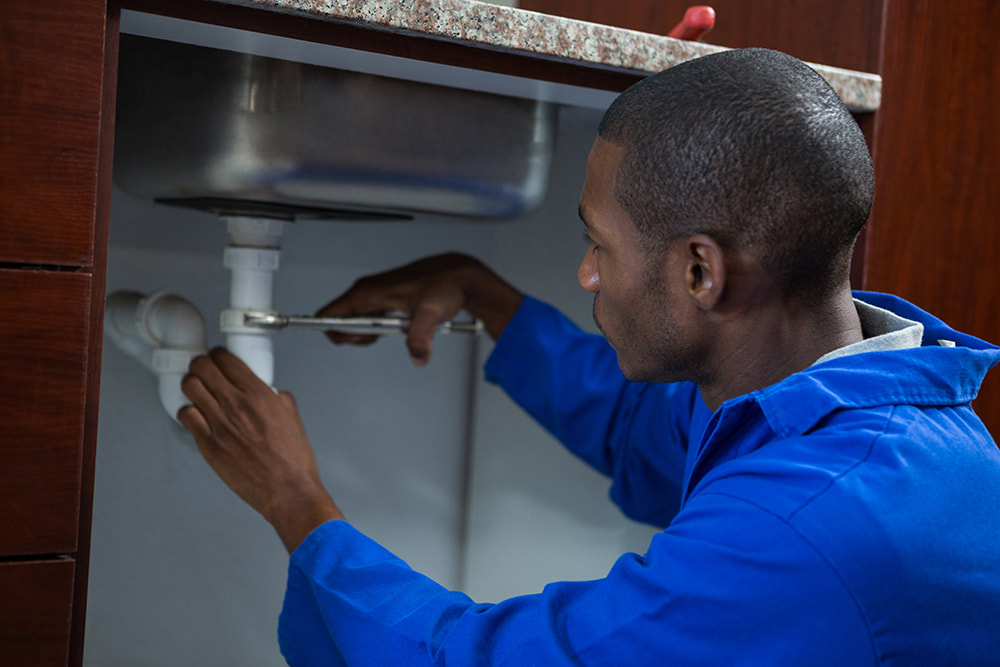
A slab leak is a supply line failing under your concrete
A slab leak is a pressurized water line that has started leaking underneath the concrete foundation your house sits on. It isn't a dramatic burst you'll hear. Most of the ones we find in San Antonio leak quietly for weeks before anyone notices, which is exactly why they do so much damage to a water bill and a slab before the homeowner catches on.
Here's the part that makes this a real local category, not a scare topic: most post-1970 homes south of Loop 1604 sit on post-tension slab foundations, and that is precisely the construction where a pinholed copper supply line under the concrete becomes a slab leak. We run leak-detection calls across Bexar County every week, and the five signs below are, in order, how homeowners usually catch one.
If you already have water pooling where it shouldn't or you can hear water running with every fixture off, skip the reading and call 210-212-7667. We run same-day routes across the metro every weekday.
Sign 1: a water bill that jumped with no change in how you use water
The clearest early sign of a slab leak is a SAWS bill that climbs for no reason you can point to, because a pressurized line under the slab leaks 24 hours a day whether anyone is home or not. Same number of people, same showers and laundry, and the bill is up 30, 50, sometimes 100 dollars. That water is going somewhere, and on a closed system under constant pressure it adds up fast.
A jumped bill on its own isn't proof of a slab leak. It could be a silent toilet, an irrigation line, or a dripping hose bib, and those are far cheaper to fix. The order you rule those out in is the whole point of our companion post on when a high water bill means a hidden leak, which walks the SAWS meter test and the dye-tab toilet check cheapest-first before anyone talks about cutting concrete.
Sign 2: a warm spot on the floor
A warm spot on a tile or hardwood floor, with no appliance or sunlight to explain it, is one of the most specific slab-leak signs there is, and it points at the hot-water line in particular. When a hot supply line pinholes under the slab, the heated water warms the concrete and the flooring directly above the break. You'll feel it under a bare foot, and pets often park themselves right on it.
The warm spot is useful because it tells us two things at once: that it's a supply leak, not a drain leak, and roughly where to start listening. It narrows the search before we ever put a listening disc down. A cold damp spot can also show up on a cold-line leak, but the warm patch is the one homeowners notice first.
"A warm patch on the tile with nothing above it to explain it is a hot-side slab leak until proven otherwise. It's the one sign that tells us which line failed before we even isolate the system."
Here's the honest caveat: a warm spot narrows things down, it doesn't pinpoint them. The leak can travel several feet along the path of least resistance before it warms the floor, so the warm tile is rarely directly over the break. That gap between where you feel it and where it actually is is why pinpointing matters, which we'll get to.
Sign 3: the meter still spins with everything shut off
This is the test that turns a suspicion into a near-certainty, and you can run it yourself in ten minutes. Shut off every water fixture and appliance in the house, then walk out to the SAWS meter in the box near the curb and watch the small leak-indicator dial (often a little triangle or a gear). If it's moving with everything off, water is leaving the system somewhere between the meter and your fixtures.
Work it in this order to tell a slab leak from a yard leak:
- Shut everything off. No running toilets, no ice maker filling, no irrigation cycle, no one in a shower. Give it a few minutes to settle.
- Read the leak indicator at the meter. If it's creeping or spinning with the house idle, you have a pressurized leak somewhere past the meter.
- Close the main shutoff at the house (usually where the service line enters, often at the front wall or in a box near the foundation). Walk back to the meter.
- Read it again. If the meter stops once the house valve is closed, the leak is inside, under the slab or in the walls. If it keeps spinning with the house valve closed, the leak is in the yard service line between the meter and the house.
A meter that's dead still with everything off is good news: whatever's driving your symptoms probably isn't a pressurized line. A meter that creeps is the single most reliable DIY confirmation of a slab or underground leak you can get without equipment.
Sign 4: foundation cracks, shifting, or doors that stick
A slab leak doesn't just waste water. It soaks the ground under one part of the foundation, and in Central Texas that matters more than almost anywhere because of what's under the slab. Much of the area sits on expansive clay over caliche, soil that swells when it's wet and shrinks when it dries. Feed one zone of that clay with a constant underground leak and it heaves unevenly, which is enough to crack drywall, open gaps at corners, and make doors and windows start to stick.
"New cracks that showed up alongside a jumped water bill aren't two problems. On our clay soils they're often the same slab leak showing up in two places: the meter and the drywall."
I'll be straight with you about scope here, because it's where honesty matters most. We are a licensed plumbing company, and we find and repair the leaking line, the plumbing side of this. We don't do foundation or structural repair, and we'll tell you that plainly rather than take on a trade we're not licensed for. What we can do is stop the leak that's feeding the movement, and document it, so a foundation pro isn't working against an active leak. New cracks with a jumped bill are worth a call sooner rather than later: 210-212-7667.
Sign 5: a musty or mildew smell, or the sound of running water
The last two signs are the ones your nose and ears catch. A persistent musty or mildew smell near a floor, in a closet, or along a baseboard, with no visible plumbing nearby, often means water has been wicking up into materials from a leak under the slab long enough to grow mildew. And in a quiet house, a faint hiss or the sound of water running when nothing is on is the leak itself, audible through the concrete.
Neither one is subtle once you know to listen for it. The running-water sound in particular tends to be loudest near the actual leak, which is one of the clues we use before bringing out acoustic equipment. If you can hear water moving with every fixture off, that lines up with a spinning meter, and the two together are about as clear as the signs get.
When this service is the wrong call
Here's the section most leak-detection pages skip because it might cost them the lead. A slab leak call isn't always your situation, and we'd rather you not pay us to find a running toilet.
Don't jump to slab-leak detection if you haven't run the meter test yet. If your meter sits perfectly still with every fixture off, you don't have a pressurized leak, and the cause is something else entirely: a silent toilet flapper (test it with a few drops of food coloring in the tank), an irrigation line, a dripping hose bib, or just a genuinely high-usage month. Those you can find and fix yourself for a few dollars. Work the cheap causes first using the high water bill walkthrough, and only call us when the meter keeps creeping with the house valve closed. That result is the gate. On the right side of it, it's a job for acoustic detection. On the wrong side of it, you'd be paying for a diagnosis you don't need yet.
How we pinpoint it without jackhammering the whole floor
Once the meter test says the leak is under the slab, the goal is to find the exact spot, not to open the whole floor hunting for it. We isolate the system first to confirm it's a pressurized supply leak and not a drain-side failure, then pinpoint the break with acoustic listening discs that pick up the sound of water escaping the line, and tracer gas where the acoustics need confirming. That's how we pinpoint a slab leak without jackhammering the whole floor: we locate it to a small footprint before any concrete is opened.
"We don't open concrete to go looking. We locate the leak to within a small area first, with discs and tracer gas, then we open only what the repair needs. Guessing with a jackhammer is how a repair turns into a remodel."
Post-tension slabs are exactly why the careful approach matters here. Those foundations have steel tensioning cables cast into the concrete, and you cannot cut into one carelessly. Pinpointing before cutting protects the cables and keeps the repair small. From there the fix is matched to your specific leak: a spot repair when the break is isolated and accessible, an overhead PEX-A reroute that abandons the bad line rather than chasing it, or a repipe when the copper is failing in more than one place. We walk through all of that on our slab leak repair in San Antonio page.
Is it an emergency, or can it wait?
A slow slab leak that's only showing up as a higher bill can usually wait a day or two for a scheduled detection visit. Shut nothing off, just get it on the calendar. But treat it as a same-day call if water is actively pooling onto flooring, if you can hear water running hard with everything off, or if a hot-side leak is warming floors across a wide area. The faster a pressurized under-slab leak is stopped, the less it feeds the clay soil and the less it costs to put right. When in doubt, shut the main off at the house and call us so we can ask the right questions over the phone.
FAQ
How can I tell if I have a slab leak myself?
Run the meter test. Shut off every fixture and appliance in the house, then watch the leak-indicator dial on your SAWS meter. If it's moving with everything off, you have a pressurized leak past the meter. Next, close the main shutoff valve at the house and read the meter again: if it stops, the leak is inside under the slab or in the walls; if it keeps spinning, it's in the yard service line. Pair that with a warm spot on the floor, a jumped bill, or the sound of running water and you've got a slab leak until proven otherwise. The meter test is the DIY confirmation; pinpointing the exact spot needs acoustic equipment, which is where we come in.
How much does slab leak detection cost in San Antonio?
We don't quote an exact figure in an article, because the number depends on the size of the home, how accessible the slab is, and whether the leak is a straightforward single break or needs tracer gas to confirm after the acoustic pass. What we will tell you honestly: detection is scoped and quoted on inspection, and you get a free estimate with competitive, upfront pricing before any work begins. We'd also rather you run the meter test first, because if the meter sits still, you may not need a detection call at all. Call 210-212-7667 and we'll size the job over the phone.
Is a warm spot on the floor always a slab leak?
Not always, but it's one of the more specific signs, and it points at a hot-water line in particular. A warm patch on tile or hardwood with no appliance, sunlight, or heating duct to explain it is a hot-side slab leak until proven otherwise. Rule out the obvious first: a nearby water heater, a sunny window, or radiant heat. If none of those fit and the warm spot comes with a jumped bill or a creeping meter, that's a slab leak worth locating.
Do you repair the foundation too?
No. We're a licensed plumbing company, so we find and repair the leaking water line, the plumbing side. We don't do foundation or structural work, and we'll say so plainly rather than take on a trade we're not licensed for. What we do is stop the leak that's feeding the soil movement and document it, so if you bring in a foundation specialist they're not working against an active leak under the slab.
Get it located
If your bill jumped, a spot on the floor is warm, or your meter keeps creeping with everything off, those are the signs of a slab leak, and the meter test is how you confirm it before anyone talks about concrete. We isolate the system, prove whether it's a supply leak or a drain issue, and pinpoint the exact spot with acoustic discs and tracer gas so the repair stays small. No upsell on faith, and plumbing-side work only.
Armor Pro Services is licensed in Texas under RMP License #36282, locally owned and operated, and available same-day or next-day across San Antonio, Alamo Heights, Schertz, Converse, and Helotes. Free estimates and competitive, upfront pricing, with workmanship backed by a one-year written warranty and parts under manufacturer terms. Call us at 210-212-7667 or book leak detection in San Antonio online.
Click to Call · 210-212-7667