Water Heater Leaking? What to Do Right Now (San Antonio)
A leaking water heater can flood a slab in hours. Here's how to find where it's leaking, shut it off safely, and know when it's a same-day call.
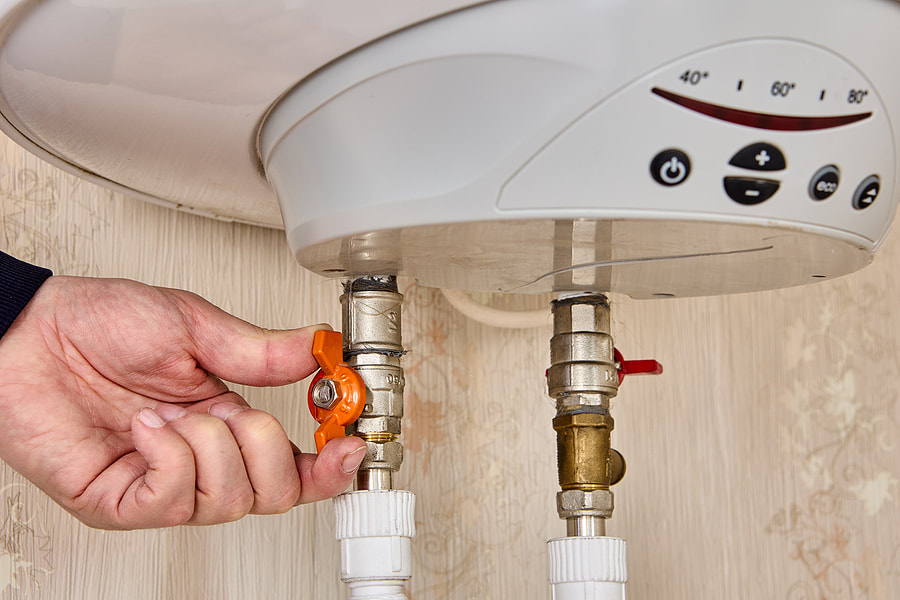
Water heater leaking? Do this first
Water sitting around your tank does not get better on its own. On a post-tension slab foundation, the kind most San Antonio homes south of Loop 1604 sit on, a steady leak can soak the slab and wick into flooring and baseboards in a matter of hours. So before you diagnose anything, get the water stopped.
The short version: shut off the water to the heater, kill the gas or power, then figure out where it is actually leaking from. If the tank itself is leaking, call us. If it is a valve or a connection, it may be a quick repair.
If water is actively spreading right now, skip the reading and call Armor Pro Services at 210-212-7667. We run same-day plumbing routes across Bexar County every weekday, and our trucks are stocked for the calls we actually run that day, so most leak jobs are one trip.
How to shut off a leaking water heater
There is a shutoff valve on the cold water line going into the top of the tank. It is usually a lever or a round handle. Turn the lever a quarter turn so it sits across the pipe, or turn the round handle clockwise until it stops. That stops new water from feeding the tank.
Next, cut the energy. On a gas unit, turn the gas control knob on the front of the tank to OFF, or close the gas shutoff valve on the supply line. On an electric unit, switch off the breaker that feeds the water heater at your panel. Never leave a gas or electric heater powered while it is draining or leaking, because it can heat with no water inside and damage the tank.
If you cannot find the heater's own shutoff, close the main water valve where SAWS service enters the home. One trip, done is our goal, but a flooded slab while you wait is not, so shut it off first and call us second.
Where is the water heater leaking from?
Where the leak shows up tells you almost everything. Walk the tank top to bottom before you decide it is dead. A puddle on the floor is not always the tank, and a tank seam leak is not always fixable. Here is how we triage it on site.
Leaking from the top of the water heater
A leak at the top of the tank usually traces back to the connections, not the tank body. The cold inlet and hot outlet fittings, the cold water shutoff valve, or a corroded nipple are the usual suspects. Wipe everything dry, then watch for a few minutes to see where the bead of water reappears.
Top leaks are frequently a repair, not a replacement. A loose or corroded supply connection, a failed valve, or a bad flex line can be swapped without touching the tank. This is the kind of leak our same-day water heater repair work handles in one visit. You can read more on our water heater repair page.
Leaking from the bottom of the water heater
A leak at the bottom is the one to take seriously. Sometimes the source is the drain valve at the base, which can drip when worn or left slightly open, and that is a straightforward repair. Other times water is running down from a higher fitting and only pooling at the base, so dry the tank fully and trace it upward before you panic.
But if the bottom of the tank is genuinely weeping and you cannot find a fitting above it, the tank itself has likely rusted through from the inside. Sediment collects at the bottom of a tank, and over years it corrodes the steel from underneath. A tank that leaks from the body is done, and no patch holds. At that point you are looking at replacement, which we cover on our water heaters page.
Leaking from a seam or the tank body
A bead of rust or moisture along a welded seam means the inner tank has failed. This is not repairable, and a failed tank can progress from a slow weep to a full rupture without much warning. If you see rust streaks down the side of the tank or moisture along a seam, plan on a changeout. When we replace a unit we pull the City of San Antonio permit and file it in-house under our RMP, and we size gas tankless for a 70 degree rise off roughly 55 degree San Antonio groundwater when a tankless swap makes sense.
Is a leaking water heater an emergency?
Some leaks are a same-day call. Others you can watch for a day. Here is the honest line between the two.
Call same-day if
Call right away if the tank body or a seam is leaking, if water is spreading across the floor faster than a slow drip, if you smell gas near a gas unit, or if the heater sits near anything that water will ruin. A tank that has started weeping from the body can let go entirely, and a sudden release of 40 or 50 gallons onto a slab is a real problem. For an active leak right now, our same-day plumbing service is the fastest route, and you can reach it by calling 210-212-7667.
You can watch it if
A slow drip from a drain valve or a single supply fitting, with no spreading water and no gas smell, can usually wait until normal hours. Shut off the water to the heater to stop the drip, put a bucket or towel under it, and call to get it on the schedule. We run same-day or next-day depending on call volume, and we will tell you straight which one your situation is.
I'll be straight with you: a leak you can stop with the shutoff valve and a towel is not the same as a tank you can hear hissing onto the slab. When in doubt, shut it off and call 210-212-7667 so we can ask the right questions over the phone.
What about a leaking T&P valve?
The temperature and pressure relief valve, the T&P valve, is the safety valve on the top or side of the tank with a discharge tube running down toward the floor. It is designed to open and release water if pressure or temperature climbs too high, so water dripping from that tube is not always a fault. It can mean the valve is doing its job because pressure in the system is too high.
If the T&P valve is discharging, do not cap or plug it, because that defeats the one safety device meant to keep the tank from over-pressurizing. The right move is to find out why it is releasing. High incoming pressure, a failed expansion tank, or a heater set too hot are the common causes, and on newer Live Oak and Converse area builds an aged expansion tank or PRV is a known failure point at the 8 to 12 year mark. A worn T&P valve that weeps with normal pressure simply needs replacing. Either way it is a repair we handle, not a reason to scrap the tank, and you can get it scheduled with our repair team or by calling 210-212-7667.
After the leak is stopped
Once the water is off and the energy is cut, take two photos: one of the whole tank and one of where the water is coming from. Note the age of the unit if you know it, since tank heaters typically last 8 to 12 years and a leak on a unit past ten is usually the end of the line. Have that ready when you call.
From there it is a simple split. If the leak is a valve, a fitting, or a connection, it is fixable, and our same-day repair service handles it. If the tank itself or a seam has failed, it is a water heater replacement. Either way we give a free estimate and competitive, upfront pricing, and the workmanship is backed by a one-year written warranty with parts under manufacturer terms.
Armor Pro Services is licensed in Texas under RMP License #36282, locally owned and operated, and available same-day or next-day across San Antonio, Alamo Heights, Schertz, Converse, and Helotes. Shut it off, then call us at 210-212-7667.
Click to Call · 210-212-7667