Dripping T&P Valve and Banging Pipes? It's Probably Your Expansion Tank (San Antonio)
A dripping T&P valve and banging pipes usually trace to one cause: a failed expansion tank or a bad PRV on a closed system. Here's how to tell.
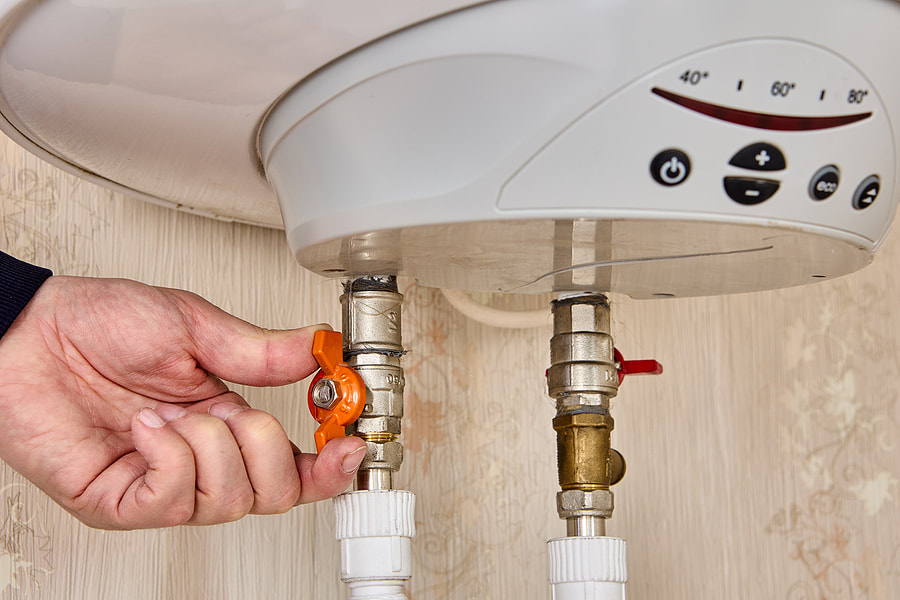
A dripping valve and banging pipes are the same problem
If water keeps dripping from the discharge tube under your water heater's T&P valve, and your pipes bang or thump when a faucet or the washer shuts off, those two symptoms usually trace back to one cause: a closed plumbing system that has nowhere to put the extra pressure when the water heater fires.
I'll be straight with you. This is one of the most common calls we run on 8 to 12 year old subdivisions toward Live Oak and Converse, and on the high-pressure Hill Country properties up in Helotes. The fix is rarely the water heater itself. It is usually a failed expansion tank or a worn pressure regulator (PRV), and both are repairs, not a reason to scrap the tank.
If a valve is discharging hot water onto your floor right now, skip the reading and call us at 210-212-7667. We run same-day plumbing routes across Bexar County every weekday.
Water heater expansion tank failure signs
An expansion tank is a small steel canister, usually mounted on the cold line near the water heater, with a rubber bladder and a charge of air inside. When the heater warms water, that water expands. On a closed system the expansion tank gives that extra volume somewhere to go. When the bladder fails or loses its air charge, there is no cushion left, and the pressure spikes every heating cycle instead.
Here are the signs we look for:
- Water dripping from the T&P discharge tube, especially in cycles a while after the heater runs, not constantly
- Banging or thumping pipes (water hammer) when a valve, toilet fill, or washer solenoid snaps shut
- House pressure that reads fine in the morning and spikes high after the heater has run a few times
- An expansion tank that sounds full of water when you tap it, or one that has gone heavy and waterlogged
- A tank installed 5 or more years ago, since the bladder is a wear part
A quick field check: tap the expansion tank with a knuckle. The top should ring hollow and the bottom should sound dull. If the whole thing thuds like it is full of water, the bladder is gone and the tank is doing nothing.
Why is my T&P valve dripping?
The temperature and pressure relief valve, the T&P valve, is the safety valve on the top or side of the tank with a tube running toward the floor. It is built to open and dump water if pressure or temperature climbs past a set point. So a dripping T&P valve is often not a bad valve at all. It is the valve doing its job because system pressure got too high.
Do not cap or plug a discharging T&P valve. That defeats the one device meant to keep the tank from over-pressurizing, and it turns a nuisance drip into a real hazard. The right move is to find out *why* it keeps opening. There are three usual causes, and they are easy to sort out once you know what to look for:
- A failed expansion tank. Water expands when heated, and with no working cushion the pressure spikes every cycle and pushes the T&P open. This is the most common cause we find on closed systems.
- High incoming pressure or a failed PRV. Many Helotes Hill Country properties run 90+ psi off the well or main, well above the 75 psi ceiling code allows in the house. A pressure regulator (PRV) is supposed to knock that down, and when it fails it lets the high pressure straight through. That is a job for a failed PRV on a closed system check.
- A heater set too hot. A thermostat reading well above 120 degrees can open a T&P on temperature alone. Less common, but worth ruling out.
A worn T&P valve that weeps under normal, correct pressure simply needs replacing, and that is a quick swap. Either way it is water heater repair if the T&P valve keeps dripping, not a reason to replace the tank. If you would rather just have us sort it, call 210-212-7667.
What does water hammer have to do with it?
Water hammer is that bang you hear when fast-closing valves (a washer solenoid, a dishwasher, a toilet fill valve) stop the flow suddenly and the moving water slams against the closed valve. On a closed system with a dead expansion tank, there is no air cushion anywhere to absorb that shock, so the banging gets worse right alongside the dripping valve. The same missing cushion drives both symptoms, which is why they tend to show up together. Fix the expansion tank or the PRV and the water hammer usually quiets down at the same time.
How a closed system creates the problem
Here is the part most homeowners never hear. When SAWS or your well feed has a check valve, a backflow preventer, or a working PRV between the street and your house, your plumbing becomes a closed system. Water can come in, but expanded water cannot push back out toward the main.
On a closed system every heating cycle has to put that expanding water somewhere. A healthy expansion tank absorbs it. With no working tank, the pressure climbs until the weakest relief point gives way, and that is your T&P valve. This is exactly why the newer suburban builds toward Live Oak and Converse hit a failure window around the 8 to 12 year mark: the expansion tank and PRV installed when the house was built are simply at the end of their service life at the same time.
What you can check yourself, and when to call
A few things are safe to look at before you call:
- Read your house pressure with a cheap gauge on an outside hose bib. Anything over 75 psi needs a PRV or a PRV repair.
- Tap the expansion tank for the hollow-versus-dull check above.
- Confirm the T&P discharge is water, not a fitting above it dripping down. Dry it, watch it, see where the bead returns.
What is not a DIY job: replacing a PRV, sizing and swapping the expansion tank to match your incoming pressure, or replacing a T&P valve while the tank is hot and under pressure. Get those wrong and you trade a drip for a flood. When the simple checks do not resolve it, that is the call.
FAQ
Do I need an expansion tank on my water heater?
If your home is on a closed system, yes, and Texas plumbing code requires one. You have a closed system if there is a PRV, a check valve, or a backflow preventer on your incoming line, which covers most San Antonio homes and nearly every property on a well. Without an expansion tank on a closed system the pressure has nowhere to go each heating cycle, which is what drips your T&P valve and bangs your pipes. We size and set the tank's air charge to match your actual incoming pressure during water heater and expansion tank installation.
Can I just replace the T&P valve and be done?
Only if the valve itself is worn and your pressure is correct. If the valve keeps opening because pressure is too high, a new valve will drip too. Fix the cause (expansion tank or PRV) first.
Is a dripping T&P valve dangerous?
A slow drip from correct pressure is mostly a nuisance, but never cap or plug the valve. A T&P that has to keep relieving high pressure is a sign your system is over-pressurized, and that stresses every fitting and connection in the house. Sort the cause and the dripping stops.
Get it diagnosed
If your T&P valve keeps dripping or your pipes bang every time a faucet shuts, the cause is almost always a failed expansion tank or a bad PRV, and both are straightforward repairs. We will check your house pressure, test the expansion tank and the PRV, and tell you straight which one it is. No upsell on faith.
Armor Pro Services is licensed in Texas under RMP License #36282, locally owned and operated, and available same-day or next-day across San Antonio, Alamo Heights, Schertz, Converse, and Helotes. Free estimates and competitive, upfront pricing, with workmanship backed by a one-year written warranty and parts under manufacturer terms. Call us at 210-212-7667.
Click to Call · 210-212-7667